On May 31, 1921, the Greenwood District of Tulsa, Oklahoma—one of the most prosperous Black communities in the United States—came under siege. In what became known as the Tulsa Race Massacre, white mobs, some armed and sanctioned by local authorities, launched a brutal assault on Black residents and their businesses. Over the course of two days, fires consumed homes, bombs were dropped from private aircraft, and entire blocks of this thriving area known as “Black Wall Street” were obliterated. The violence left as many as 300 Black Tulsans dead and thousands homeless, marking one of the darkest and most devastating acts of racial terrorism in American history.
Greenwood’s Rise and Promise
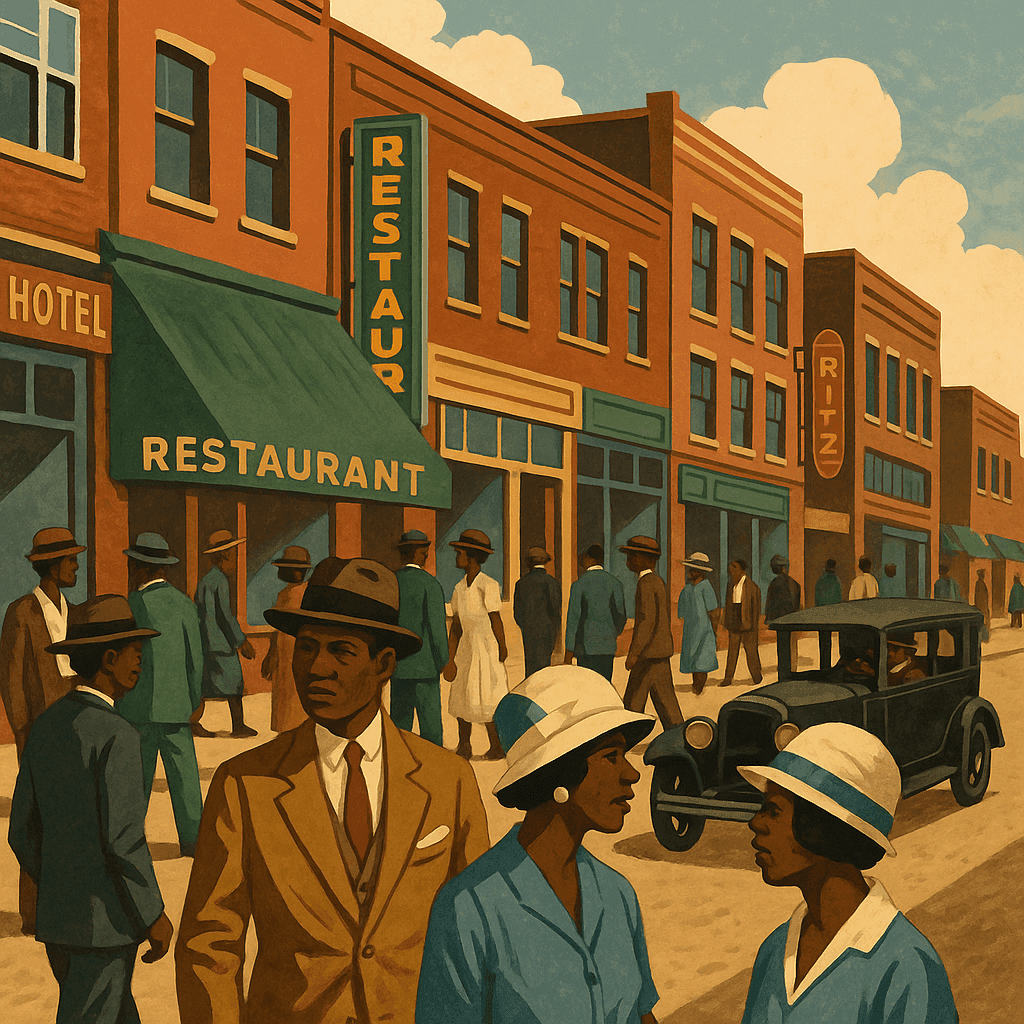
In the early 20th century, Greenwood flourished as a beacon of Black enterprise and culture. Segregated from the white parts of Tulsa, the community built its own thriving economy with newspapers, theaters, law offices, restaurants, and doctors. By 1921, Greenwood had earned the nickname “Black Wall Street,” symbolizing both the community’s economic self-sufficiency and the ambitions of its residents. But this success also sparked envy and resentment among many white Tulsans, laying the groundwork for racial tension and violence.
The spark for the massacre came when a young Black man, Dick Rowland, was accused of assaulting a white female elevator operator—an accusation later understood to be baseless. When rumors of a lynching spread, Black residents, including World War I veterans, went to the courthouse to defend Rowland. A confrontation broke out, gunfire erupted, and chaos quickly escalated. By nightfall, white mobs began looting and burning Greenwood to the ground.
The Devastation Unleashed
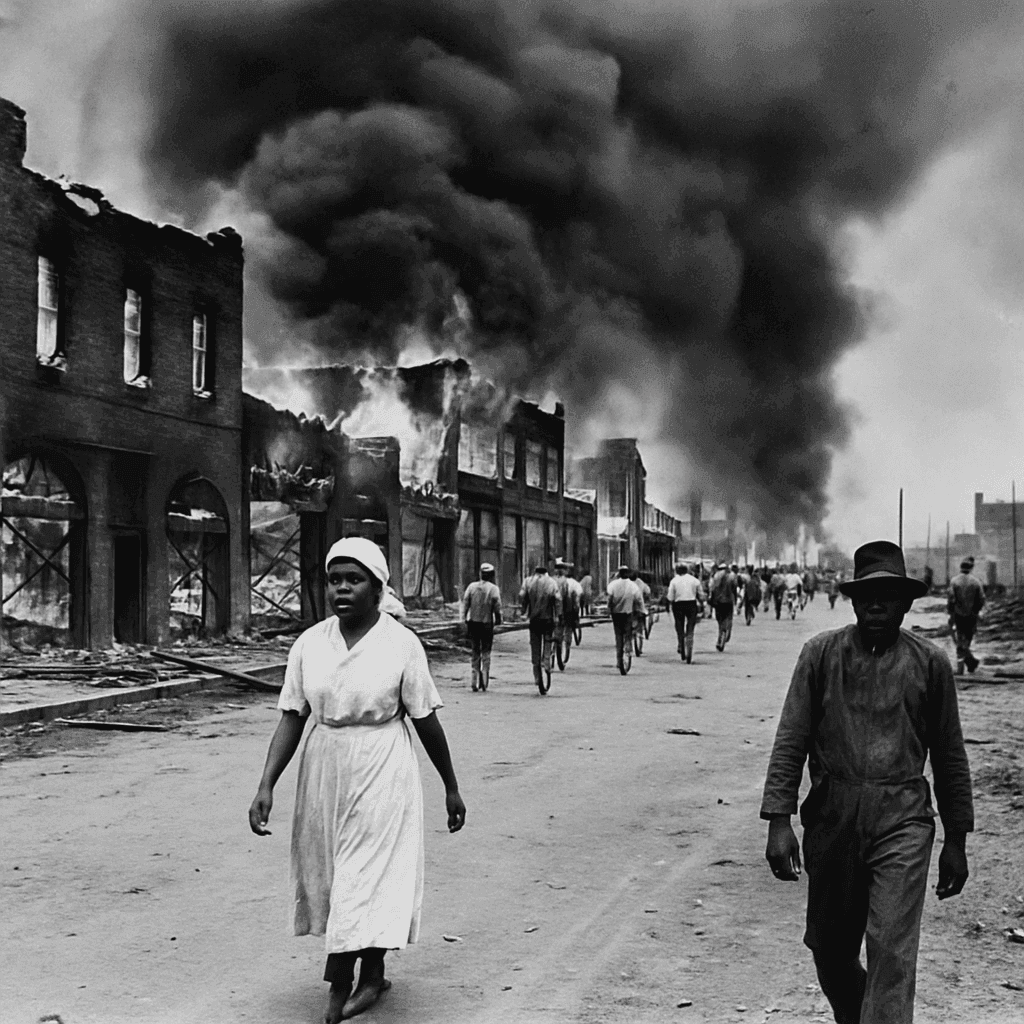
As the attacks unfolded, the white mobs were not acting alone. City officials deputized white men and provided them with weapons. Police joined in or stood by as buildings were torched and residents shot. Even private planes were used to drop incendiaries and shoot at fleeing victims from above. Greenwood’s vibrant core—its churches, schools, businesses, and homes—was reduced to smoldering rubble.
The human toll was staggering. While official records at the time minimized the death count, later investigations estimate that up to 300 Black residents were killed. Over 1,200 homes were destroyed and more than 10,000 people were left homeless. Survivors were rounded up and detained in internment centers, forced to carry identification tags and rely on permits to move freely. In the aftermath, insurance companies refused to cover the damages, and city officials declined to provide restitution, effectively erasing the financial legacy of generations.
Suppressed Memory, Renewed Reckoning
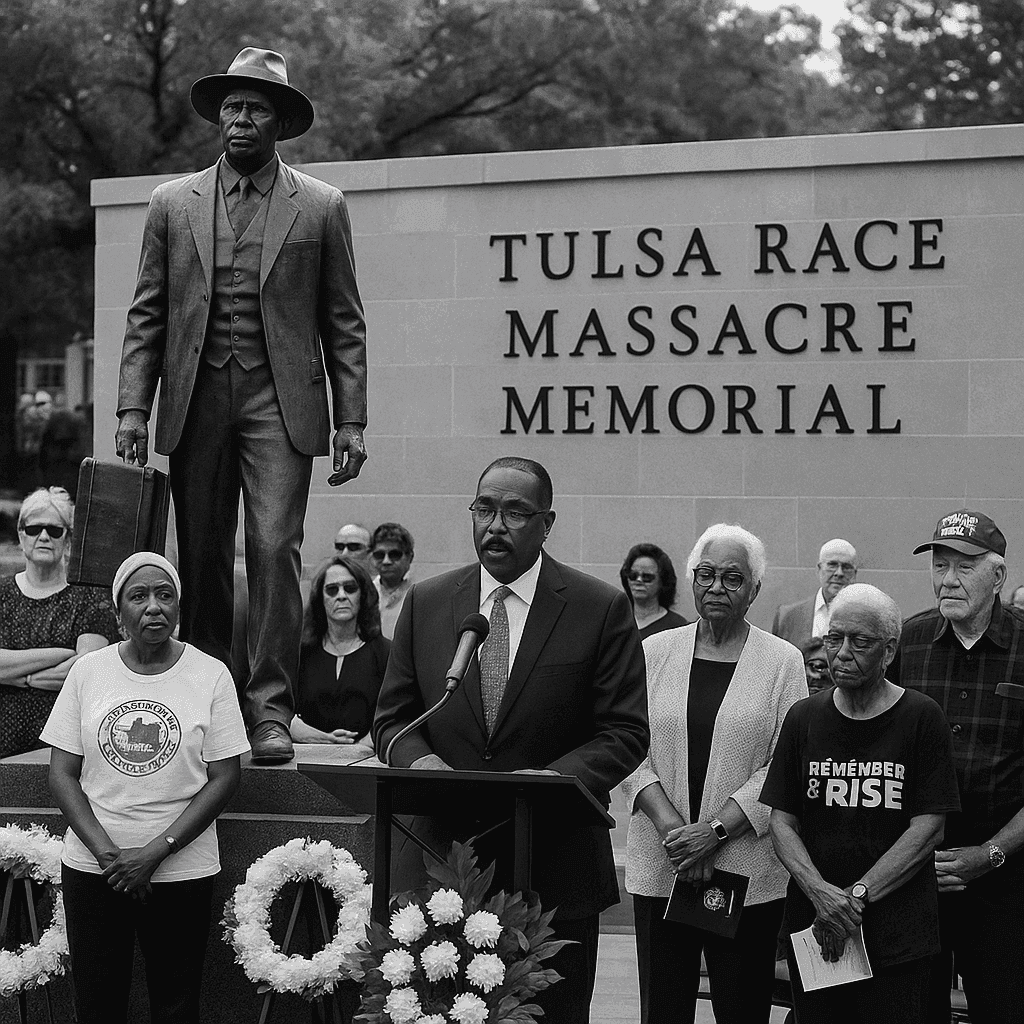
For decades, the Tulsa Race Massacre was buried in silence. Local newspapers failed to report the full scale of the devastation, and schools did not include it in their curriculum. Survivors and their descendants carried the trauma in silence, while the broader public remained unaware. It wasn’t until the late 20th century, and especially into the 21st, that serious public acknowledgment and historical inquiry began to uncover the truth.
In recent years, the massacre has come to symbolize not only the horrors of racial violence but also the resilience of the Black community and the long struggle for justice. Public memorials, documentaries, and educational initiatives have started to address the atrocity. In 2021, the centennial of the massacre drew national attention, including testimony from living survivors before Congress and renewed calls for reparations and formal apologies