April 29: The Tapes That Told Too Much, Long Overdue on the Mall, Two Billion Witnesses
April 29 moves across the full register of what public life can be: the exposure of power abused in the shadows, the belated honoring of those who sacrificed everything in the open, and the global ceremony of a wedding that two billion people found reason enough to watch. These are not stories that would seem, at first glance, to belong together — a president cornered by his own recordings, a generation of veterans finally given their place on the National Mall, a royal couple making their vows in a cathedral that has witnessed eight centuries of English history. But they share a quality that April 29, in its particular way, seems to understand: the quality of a reckoning arrived at, of something that was owed finally being paid, of the world pausing to bear witness to something that mattered.
1,254 Pages
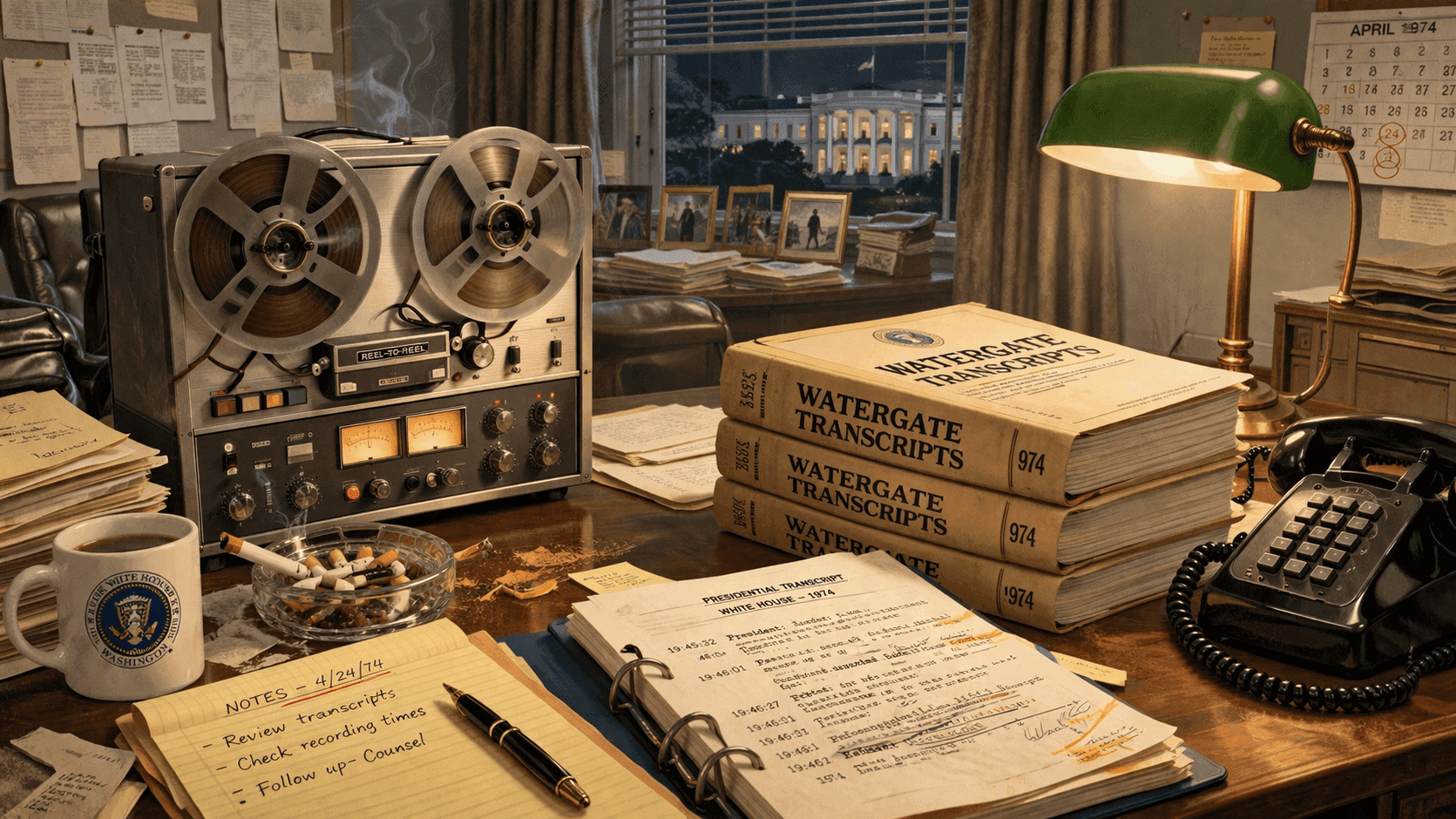
On April 29, 1974, President Richard Nixon appeared on national television and announced that he would release edited transcripts of the White House tape recordings that had been subpoenaed by the Senate Watergate Committee — 1,254 pages of transcribed conversations, delivered to Congress and simultaneously made available to the public in a bound volume that bookstores were selling for the price of a paperback within days. Nixon presented the release as a demonstration of transparency, framing the transcripts as proof that he had not personally directed the Watergate cover-up. The strategy did not survive contact with the actual contents. The transcripts revealed a president who was coarse, calculating, and deeply involved in the management of the cover-up — a man whose discussions of the break-in and its aftermath were characterized by the kind of institutional cynicism that the Oval Office had not previously been seen to contain. The phrase "expletive deleted," used throughout the transcripts wherever profanity had been removed, became an instant cultural shorthand for the gap between Nixon's public image and private conduct.
The transcripts did not, as Nixon had hoped, satisfy his congressional critics. The House Judiciary Committee, which was conducting its own impeachment inquiry, rejected the edited transcripts and renewed its demand for the actual tape recordings — a demand that the Supreme Court would ultimately uphold in United States v. Nixon, issued unanimously in July 1974. When the unedited tapes were finally produced, they contained the "smoking gun" conversation of June 23, 1972, in which Nixon and his chief of staff discussed using the CIA to obstruct the FBI's investigation — direct evidence of obstruction of justice six days after the Watergate break-in. Nixon announced his resignation on August 8, 1974, effective the following day. The April 29 transcript release, which had been designed to end the story, had instead accelerated it — demonstrating once more the principle that attempts to manage accountability rarely survive the full truth.
Finally, a Place on the Mall
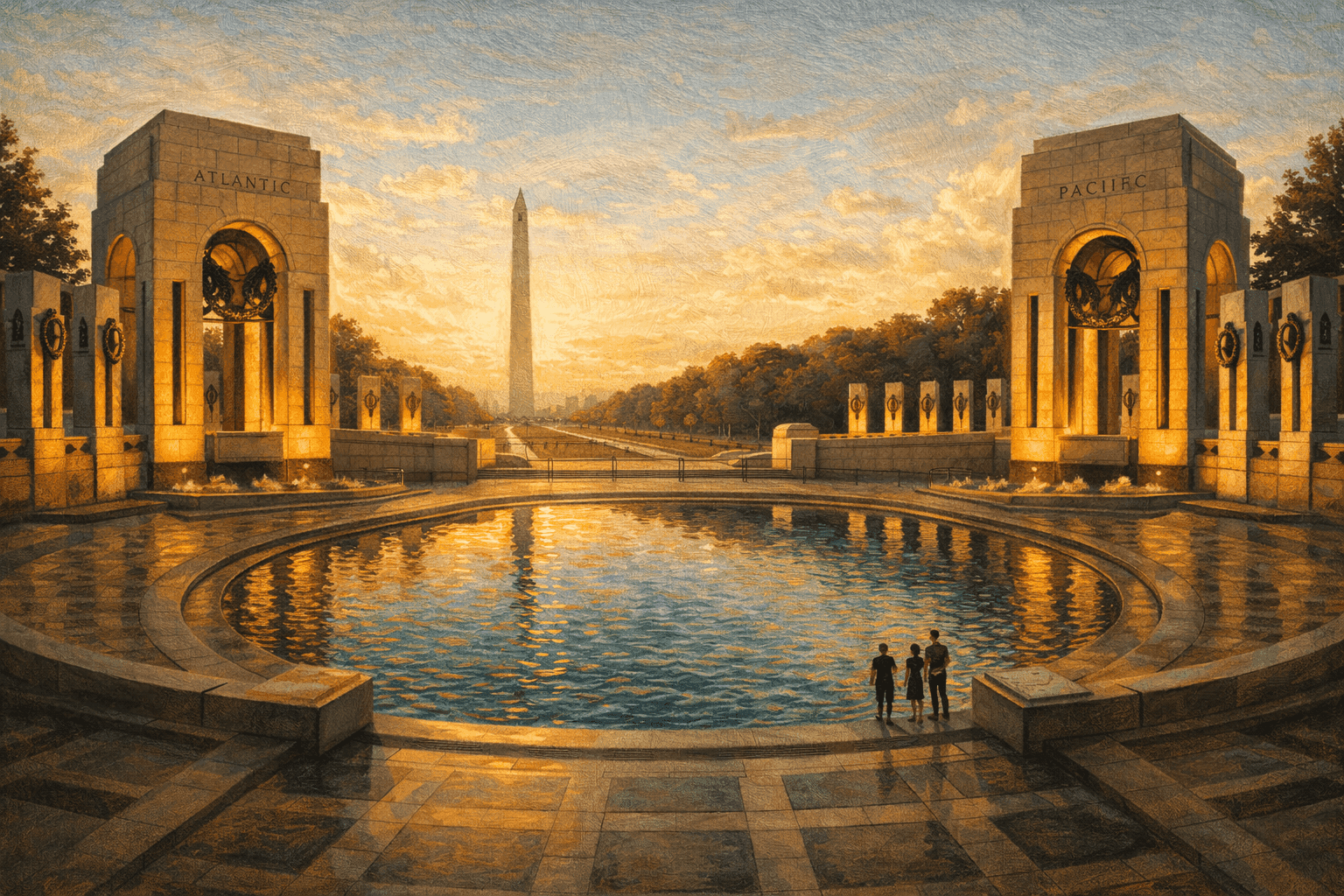
On April 29, 2004, the National World War II Memorial was formally dedicated on the National Mall in Washington, D.C., in a ceremony attended by veterans, families, and dignitaries — and by the knowledge that the tribute was, for hundreds of thousands of those it honored, arriving too late. More than 400,000 Americans had died in the war; by 2004, roughly 1,000 of the sixteen million Americans who had served in it were dying every day. The memorial had been authorized by Congress in 1993, its site selected only after considerable controversy over placing a new structure between the Lincoln Memorial and the Washington Monument, and its construction delayed through years of design revisions, legal challenges, and funding battles. The veterans who showed up in Washington that April day — many of them in their eighties, some in wheelchairs — had waited sixty years for what the Korean War Memorial had received in 1995 and the Vietnam Veterans Memorial in 1982.
The memorial itself is a study in the attempt to give physical form to a sacrifice of almost incomprehensible scale. Fifty-six granite pillars — one for each state and territory — surround a plaza anchored by two forty-three-foot arches representing the Atlantic and Pacific theaters. At the base of the Freedom Wall, 4,048 gold stars are arranged in rows, each star representing one hundred American deaths in the war — a total of 404,800 lives rendered in a field of gold that visitors have to stand before for a moment before they fully understand what they are looking at. The rainbow pool at the center of the plaza reflects sky and stone, and the names of the major campaigns are inscribed in the granite around its edges. The World War II Memorial is not an easy place to visit casually. It asks something of the people who stand in it — a few minutes of attention to what was spent so that they could stand there at all.
Westminster, and the Watching World
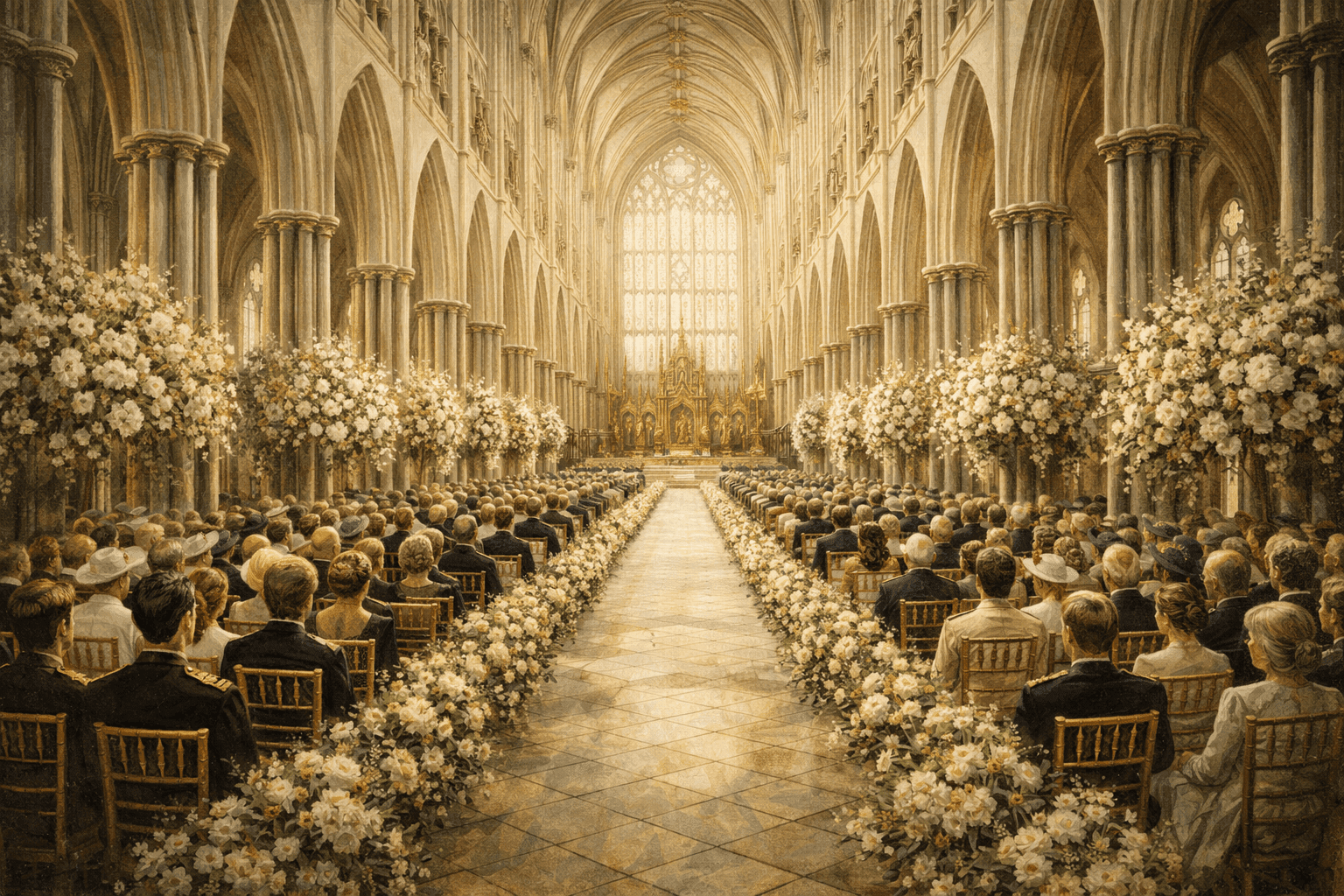
On April 29, 2011, Prince William, second in line to the British throne, married Catherine Middleton at Westminster Abbey in London before an estimated two billion television viewers worldwide — one of the largest audiences in the history of broadcast media. The wedding had been awaited with the particular intensity that attaches to royal ceremonies, and it delivered everything the occasion required: the ancient Abbey, the military uniforms, the carriage procession, the balcony kiss, and the dress — a long-sleeved ivory lace creation by Sarah Burton of Alexander McQueen that became one of the most discussed garments of the decade. But what gave the ceremony its particular resonance, beyond the pageantry, was the evident ordinariness of the two people at its center. Catherine Middleton was not an aristocrat; she had grown up in a middle-class family, attended the University of St. Andrews as a regular student, and met her future husband in a tutorial group. Her presence at the altar of Westminster Abbey represented something genuinely new in royal history.
The global audience that turned out for the wedding reflected something beyond the traditional affection for British royalty. In a world still climbing out of the financial crisis of 2008 and navigating the anxieties of a turbulent decade, the ceremony offered — for a few hours, without demanding anything in return — a spectacle of unambiguous beauty and public joy. Crowds gathered in living rooms and pubs and on large outdoor screens in cities from Sydney to New York to Lagos, connected by the shared experience of watching two people make a promise in one of the world's great cathedrals while the world watched. The marriage that followed has proven, unlike many royal unions of the preceding century, genuinely durable — and the family built by William and Catherine has become the most photographed and most watched in the world. But the wedding itself remains the image that fixed them in the global imagination: two billion people, one April morning, one yes.