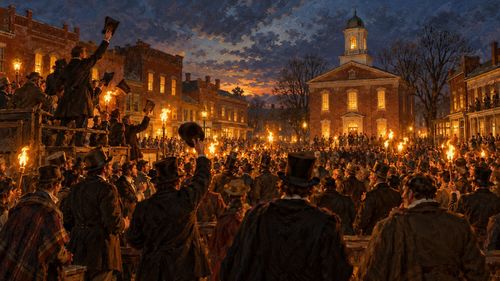
Our Destinies Have Been Interlinked
On Tuesday, April 28, 2026, King Charles III stood at the podium in the House Chamber of the United States Capitol and addressed a joint meeting of Congress — the first British monarch to do so since his mother, Queen Elizabeth II, in 1991, and only the second in history. He spoke for roughly twenty minutes to a packed chamber that gave him multiple standing ovations, including a rare bipartisan one for Ukraine. He began by offering his condolences for Saturday's shooting at the White House Correspondents' Dinner. He closed by quoting the words he had used on his first visit to America as a young man, more than half a century ago. In between, he traced the entire arc of the relationship between two nations that began as adversaries and became something the world had never quite seen before: an alliance built not on necessity alone, but on a genuinely shared idea of what civilization should look like.
From Runnymede to the House Chamber
Charles anchored his address in history that runs deeper than most American-British diplomatic encounters: the Magna Carta of 1215, sealed by King John on the banks of the Thames at Runnymede, which the U.S. Supreme Court Historical Society has calculated has been cited in at least 160 Supreme Court cases since 1789. He noted that Britain's Declaration of Rights of 1689 provided the source of principles reiterated — "often verbatim" — in the American Bill of Rights of 1791. He reminded a divided Congress that the two countries had stood shoulder to shoulder through two world wars, the Cold War, Afghanistan, and the only invocation of Article 5 in NATO's history, which came when Britain answered America's call after September 11, 2001. "We stood with you then," he said, "and we stand with you now in solemn remembrance of a day that shall never be forgotten." The chamber rose. The speech accomplished something genuinely rare in the current Washington climate: it produced a room full of laughter, unity, and bipartisan standing ovations, in stark contrast to the fractured atmospherics of recent State of the Union addresses.
The visit arrives at a complicated moment in the Special Relationship — the term Winston Churchill coined to describe the Anglo-American alliance, and which has governed the self-understanding of both nations ever since. President Trump has publicly criticized British Prime Minister Keir Starmer for insufficient support of the U.S. war in Iran, and a leaked recording of Britain's ambassador to Washington described the U.S.-U.K. bond in notably deflated terms. Yet Charles — constitutionally bound to remain above politics, able to represent his country but not speak for its government — navigated the tensions with careful precision: pushing back on doubts about NATO's value, calling for peace in Ukraine, and framing the relationship not in terms of any single government's positions but in the 800-year continuum of shared law, shared sacrifice, and shared ideals. "The story of our two nations," he told Congress, "is one of reconciliation, renewal and remarkable partnership." The state dinner that followed at the White House — the first formal white-tie event there since President George W. Bush hosted Queen Elizabeth in 2007 — ended with Trump hailing the bond between the two nations as "priceless and eternal."
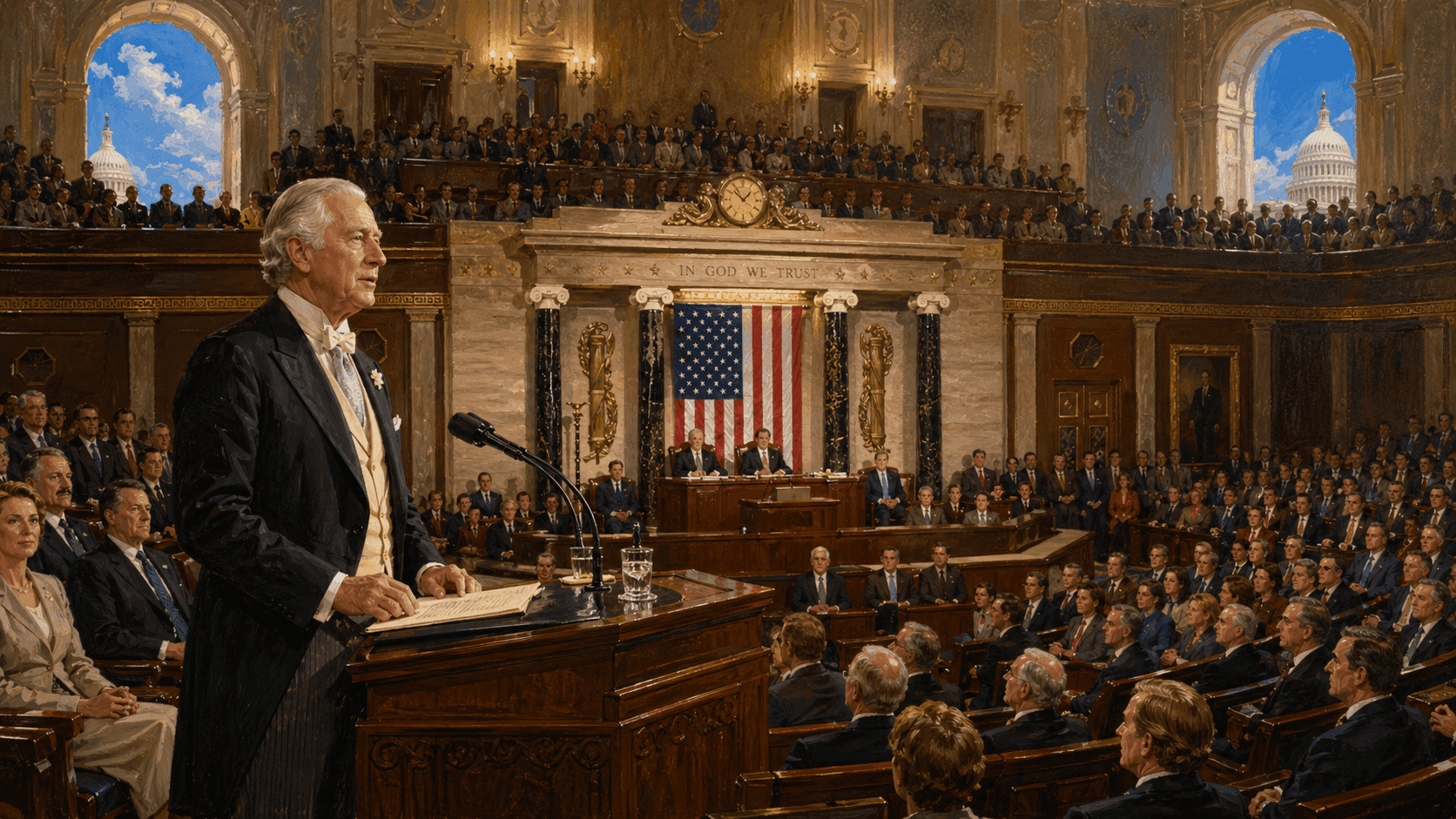
The relationship Charles came to celebrate has survived everything: a revolution that made enemies of the two peoples, a second war in 1812, a century of rivalry, and then — forged in the shared catastrophe of the World Wars — something that endured. The America that declared independence from Britain 250 years ago this July is hosting its former sovereign's son at the White House and giving him standing ovations in its legislature. The British king who addressed Congress reminded its members that an acre of land at Runnymede — where Magna Carta was sealed in 1215 — was given to the United States by the people of the United Kingdom, in memory of John F. Kennedy, as a symbol of their shared resolve in support of liberty. "For all that time," Charles told Congress on Tuesday, "our destinies have been interlinked." Eight hundred and eleven years of shared legal tradition. Two hundred and fifty years since the revolution that tried to sever it. One speech, in one chamber, to remind both nations of everything that held.