April 28: Born to Build the Impossible, The Champion Who Refused, Open Sky at 24,000 Feet
Limits are, in the end, just suggestions — at least for the people who decide not to honor them. April 28 belongs to three of those people: an Italian farm boy who built tractors, had a fight with Enzo Ferrari, and decided to build a better sports car himself; a world heavyweight boxing champion who told a government he would not go to a war he believed was wrong, knowing exactly what it would cost him; and a Boeing 737 and its crew who, at 24,000 feet over the Pacific, found a third of the aircraft's fuselage suddenly gone and chose, in the most literal sense, not to let their passengers fall. Each story is about what people are capable of when they refuse the limits in front of them — whether those limits are set by a competitor's arrogance, a government's demand, or the sudden, terrifying proximity of the open sky.
The Tractor Farmer Who Humiliated Ferrari
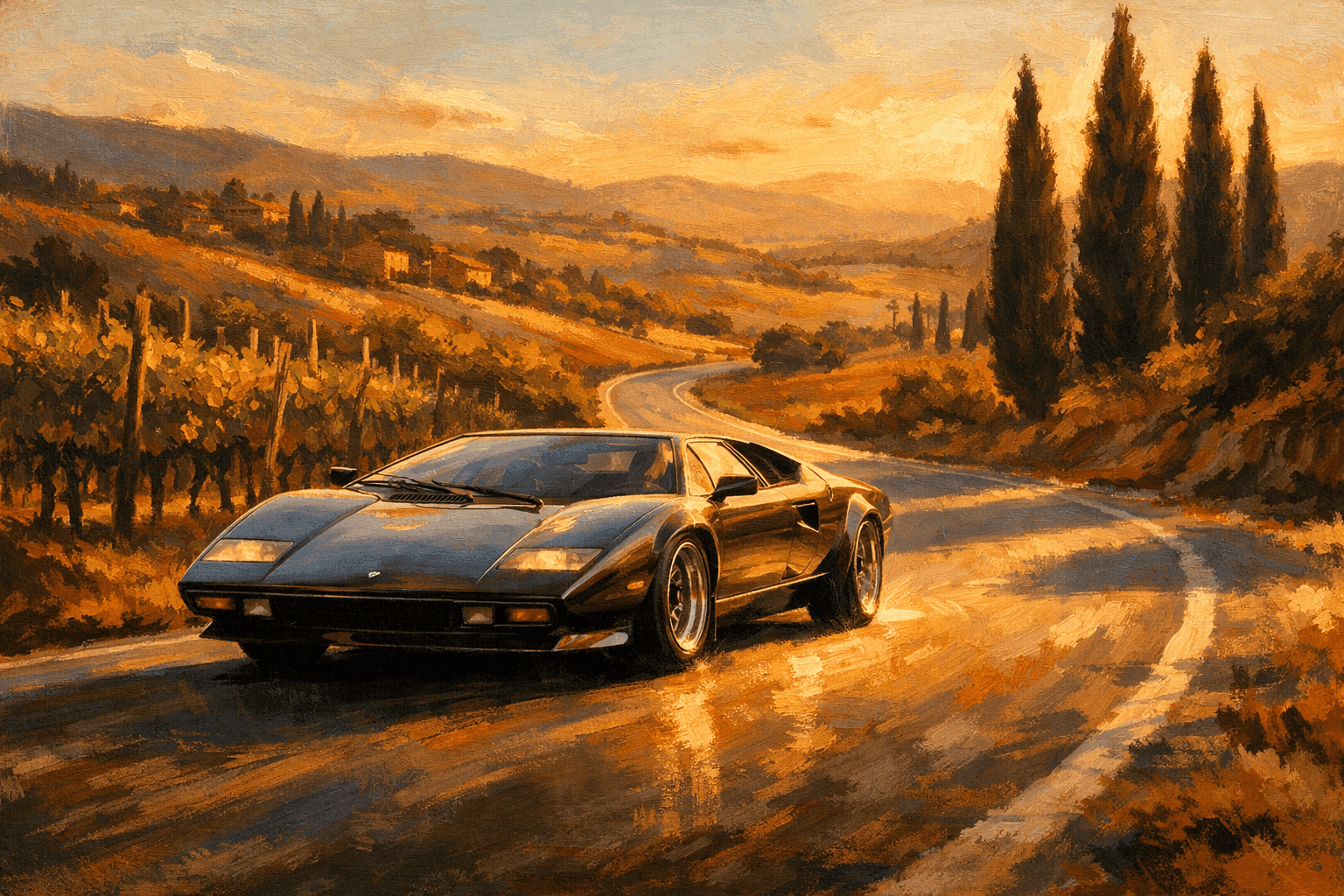
On April 28, 1916, Ferruccio Lamborghini was born in Cento, in the Emilia-Romagna region of northern Italy, the son of grape farmers who could not have anticipated that the boy would grow up to attach his name to machines capable of traveling at two hundred miles per hour. Lamborghini trained as a mechanic, served in the Italian Air Force during World War II, and emerged from the war with the practical ingenuity and the entrepreneurial appetite that would define the next two decades of his life. He built a successful tractor manufacturing business — Lamborghini Trattori — using surplus military parts in the postwar years, then expanded into heating and air conditioning systems, accumulating enough wealth by the early 1960s to indulge his passion for high-performance cars. He bought a Ferrari. He found it unsatisfactory. He drove to Maranello, introduced himself to Enzo Ferrari, and had the temerity to explain what he thought was wrong with the clutch. Ferrari, famously, told him that a tractor farmer had no business offering opinions about sports cars.
Lamborghini's response was to found Automobili Lamborghini in 1963 and build, within two years, the 350 GT — a grand tourer that immediately established itself as a genuine rival to Ferrari's finest. The car that secured the legend, however, was the Miura, introduced in 1966, which placed its V12 engine mid-mounted behind the passenger compartment in a configuration that had previously been used only in racing cars, producing a road car of such speed and visual drama that it is widely considered the world's first modern supercar. The Countach, the Diablo, the Murciélago, the Huracán — each successive generation of the raging bull has carried forward the original argument that Ferruccio made to Enzo Ferrari in that Maranello office: that a man who builds tractors can build something that makes your best work look timid. He sold the company in 1972, retired to his Umbrian estate, and died in 1993. The cars bearing his name have not slowed down.
I Ain't Got No Quarrel
On April 28, 1967, Muhammad Ali — born Cassius Clay, heavyweight champion of the world, and the most recognizable athlete on the planet — appeared at the Houston Military Entrance Processing Station and refused, three times, to step forward when his name was called for induction into the United States Army. His stated reasons were both religious and moral: as a minister of the Nation of Islam, he claimed conscientious objector status, and he had already stated publicly that he had no quarrel with the Viet Cong — the enemy America was fighting — while Black Americans were being denied basic civil rights at home. The military refused his conscientious objector claim. The consequences were immediate and severe: Ali was stripped of his heavyweight title by boxing's governing bodies, his boxing license was revoked in every state, and he was indicted on federal draft evasion charges that carried a potential five-year prison sentence. He was twenty-five years old.
The three and a half years that followed were, professionally, a wasteland — the peak years of a fighter's career, gone. Ali lectured at colleges, spoke at anti-war rallies, and waited while his case wound through the courts. The Supreme Court reversed his conviction unanimously in 1971, ruling that the government had improperly denied his conscientious objector claim. He returned to boxing, recaptured the heavyweight title twice — once against George Foreman in the "Rumble in the Jungle" in 1974, once against Joe Frazier in the "Thrilla in Manila" in 1975 — and became, over the course of those years, something larger than a boxer. The man who had been vilified as a traitor and a coward in 1967 was chosen to light the Olympic flame at the 1996 Atlanta Games, his hand trembling with the Parkinson's disease that would claim him in 2016. The arc of his career is a study in what happens when a person of extraordinary gifts refuses, at enormous personal cost, to do what power demands of him — and turns out to be right.

Flight 243
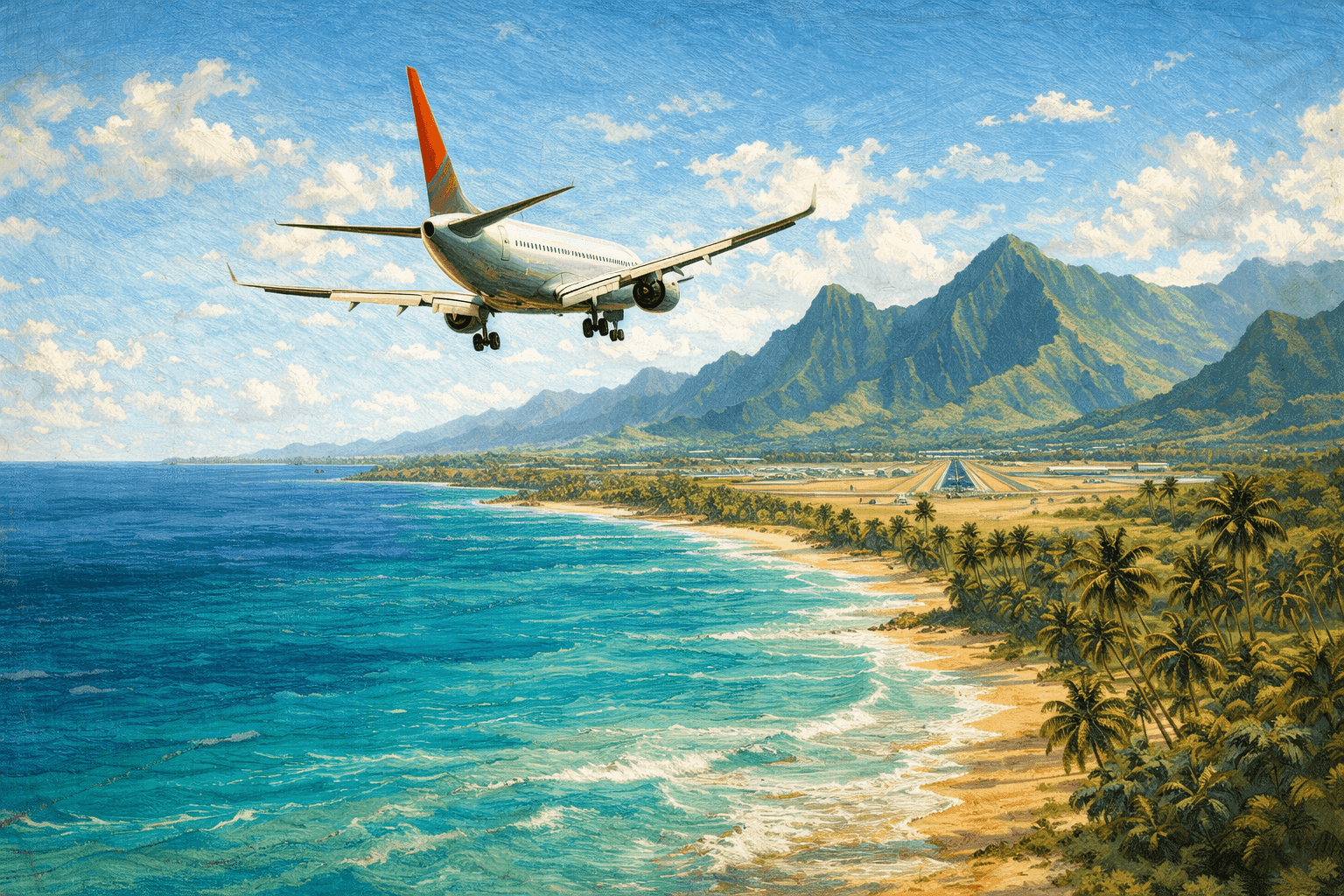
On April 28, 1988, Aloha Airlines Flight 243 departed Hilo for Honolulu on what was scheduled to be a twenty-minute inter-island hop, carrying ninety passengers and a crew of five. At approximately 24,000 feet, a section of the fuselage roughly eighteen feet long tore away with explosive force, exposing the forward cabin to the open sky and 500-mile-per-hour winds. Flight attendant Clarabelle Lansing, who had been standing in the aisle, was swept out of the aircraft and was never found. Sixty-five passengers sustained injuries, many of them serious. The aircraft was now, in technical terms, structurally incompatible with continued flight — the kind of damage that the engineering of the Boeing 737 had not contemplated passengers surviving, let alone landing from.
Captain Robert Schornstheimer and First Officer Madeline Tompkins flew it to the ground anyway. With no intercom, no communication with the cabin, and no way to assess the full extent of the structural damage, they executed an emergency descent and managed a landing at Kahului Airport on Maui — an airport that had not been their intended destination but that was closer. The aircraft touched down intact, and eighty-nine of the ninety passengers walked off it alive. The subsequent investigation found that the fuselage failure was the result of metal fatigue and corrosion — the aircraft had made approximately 89,000 flights over nineteen years, many of them short inter-island hops that subjected the fuselage to repeated pressurization cycles that accelerated structural wear. The disaster led directly to sweeping changes in aircraft maintenance protocols and inspection requirements worldwide, and it recalibrated the aviation industry's understanding of how metal fatigues under conditions of repeated stress. Flight 243 is studied in aviation safety programs to this day — not only as a near-catastrophe but as a case study in what extraordinary airmanship, applied with perfect composure in the most disorienting possible circumstances, can accomplish.