April 24: The Library That Became a Nation's Memory, Rising in Dublin, Feel the Burn
There is a through line connecting a small congressional reference library in a new capital city, a band of Irish nationalists seizing the General Post Office in Dublin, and a fitness instructor in leg warmers stepping into the homes of millions of Americans via VHS tape. That thread is access — the stubborn, democratic insistence that knowledge, liberty, and physical well-being are not privileges to be reserved for the few but possibilities to be placed within reach of anyone willing to reach for them. April 24 has, across three very different centuries, been a day for exactly that kind of reaching.
The Largest Library on Earth
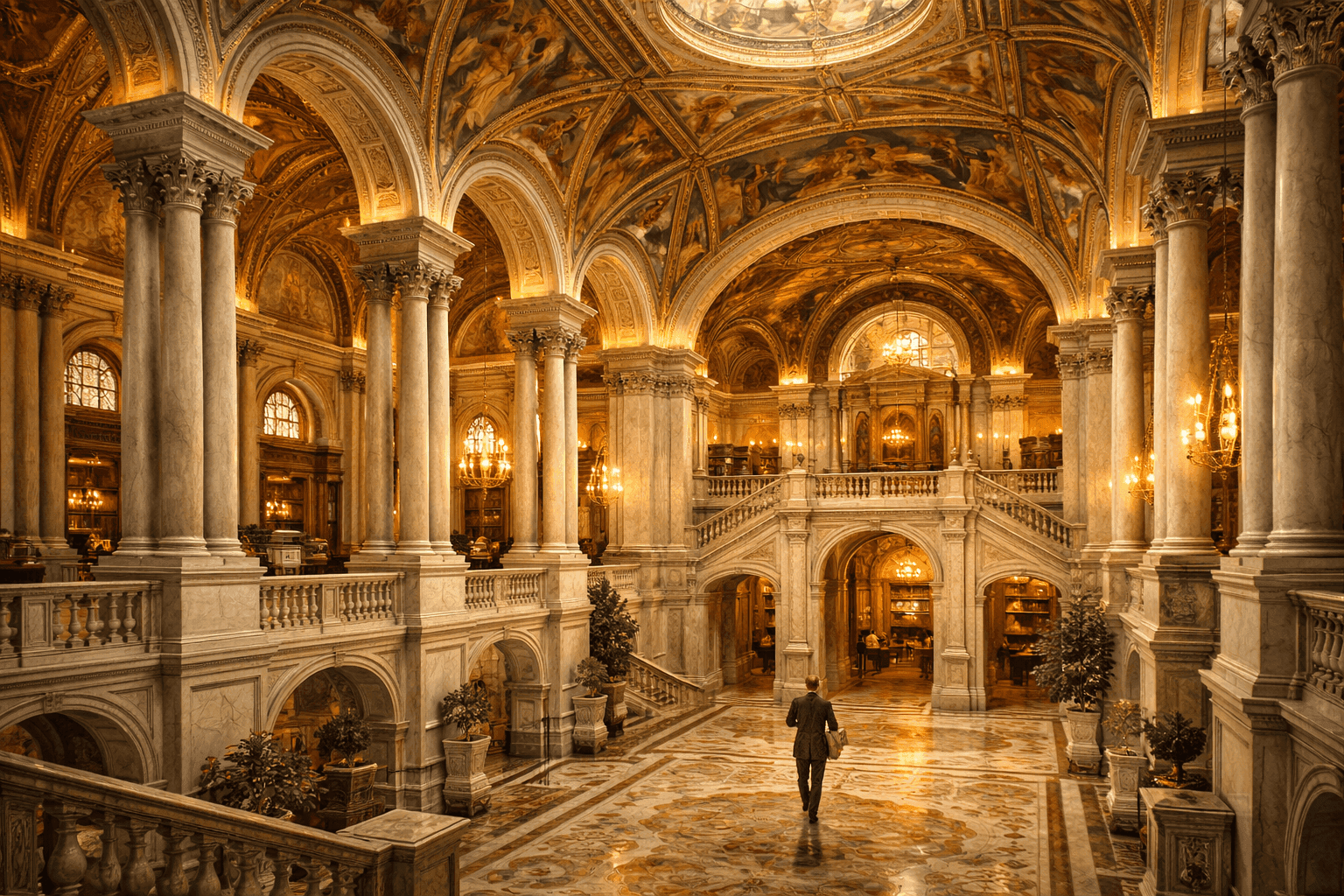
On April 24, 1800, President John Adams signed legislation establishing the Library of Congress, appropriating $5,000 to purchase books for the use of Congress as it prepared to move from Philadelphia to the new capital of Washington, D.C. The initial collection — 740 volumes and three maps, ordered from London — was housed in the Capitol building and intended strictly for the use of lawmakers. It was, by the standards of what it would become, almost comically modest. The collection was destroyed when the British burned the Capitol during the War of 1812; Thomas Jefferson offered his personal library of 6,487 volumes as a replacement, and Congress purchased it in 1815, seeding the institution with the breadth of a Renaissance man's intellectual curiosity and establishing the principle, articulated by Jefferson himself, that a library serving a legislature must encompass all subjects, because there is no subject that does not bear on the work of governance.
What grew from those 740 volumes is, today, the largest library on earth: more than 173 million items in 470 languages, including 17 million books, 70 million manuscripts, the personal papers of twenty-three presidents, the world's largest collection of legal materials, and archives of maps, photographs, films, sound recordings, and musical scores that constitute an irreplaceable record of human expression across centuries. The Library of Congress holds a copy of the Gutenberg Bible. It holds the contents of Abraham Lincoln's pockets on the night he was shot. It holds recordings of American folk music collected in the field by Alan Lomax, sheet music handwritten by George Gershwin, and the original draft of what would become "The Star-Spangled Banner." Its mission has expanded steadily beyond Congress to serve researchers, scholars, and the public, and its digital archives have made portions of its collection accessible to anyone on earth with an internet connection. The $5,000 appropriation of April 24, 1800, has compounded, in the most gratifying possible way, beyond any reasonable projection.
We Serve Neither King Nor Kaiser
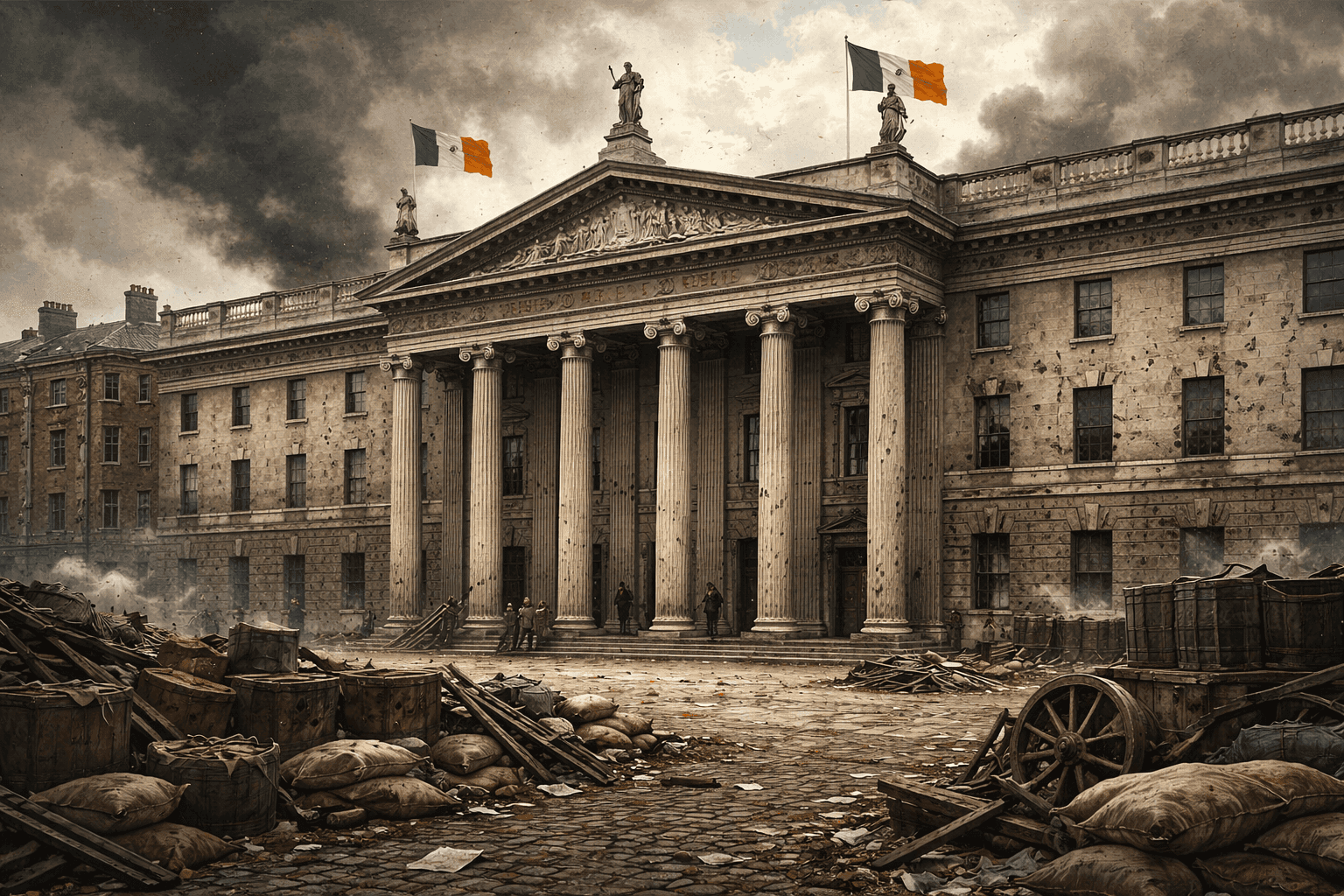
On Easter Monday, April 24, 1916, approximately 1,200 Irish republican and nationalist volunteers seized key buildings across Dublin — the General Post Office on Sackville Street, the Four Courts, the South Dublin Union, Boland's Mill — and proclaimed, from the steps of the GPO, the establishment of an Irish Republic independent of British rule. The Proclamation of the Irish Republic, read aloud by Patrick Pearse and signed by seven leaders of the rising, declared a provisional government and invoked the right of the Irish people to sovereignty in language that drew on both the American Declaration of Independence and the French Revolutionary tradition. Dublin's citizens, most of whom had not been forewarned, watched with a mixture of confusion, skepticism, and in some cases open hostility — many Dubliners had sons fighting with the British Army in the trenches of France, and the timing of the rising, launched while Britain was at war, struck many as opportunistic at best.
The British military response was swift and overwhelming. By the following Saturday, the GPO was in flames and Pearse had issued a surrender order to prevent further civilian casualties. The rising had lasted six days. Roughly 485 people were killed, the majority of them Dublin civilians caught in the crossfire. In its immediate aftermath, public opinion in Ireland remained largely hostile to the rebels — until the British executed fifteen of the rising's leaders over a ten-day period in May 1916, shooting them one or two at a time in the yard of Kilmainham Gaol. The executions transformed public sentiment with a speed that astonished the British authorities. Men who had been jeered through the streets as prisoners became, within weeks of their deaths, martyrs whose faces appeared on walls across the country. The Easter Rising did not achieve Irish independence — that would come, incompletely and at enormous further cost, in 1921 and 1922 — but it irreversibly changed the terms of the debate, turning what had been a minority cause into a national one. The GPO on Sackville Street — now O'Connell Street — still bears the bullet scars of Easter Week. They have never been repaired.
The Workout That Changed Everything
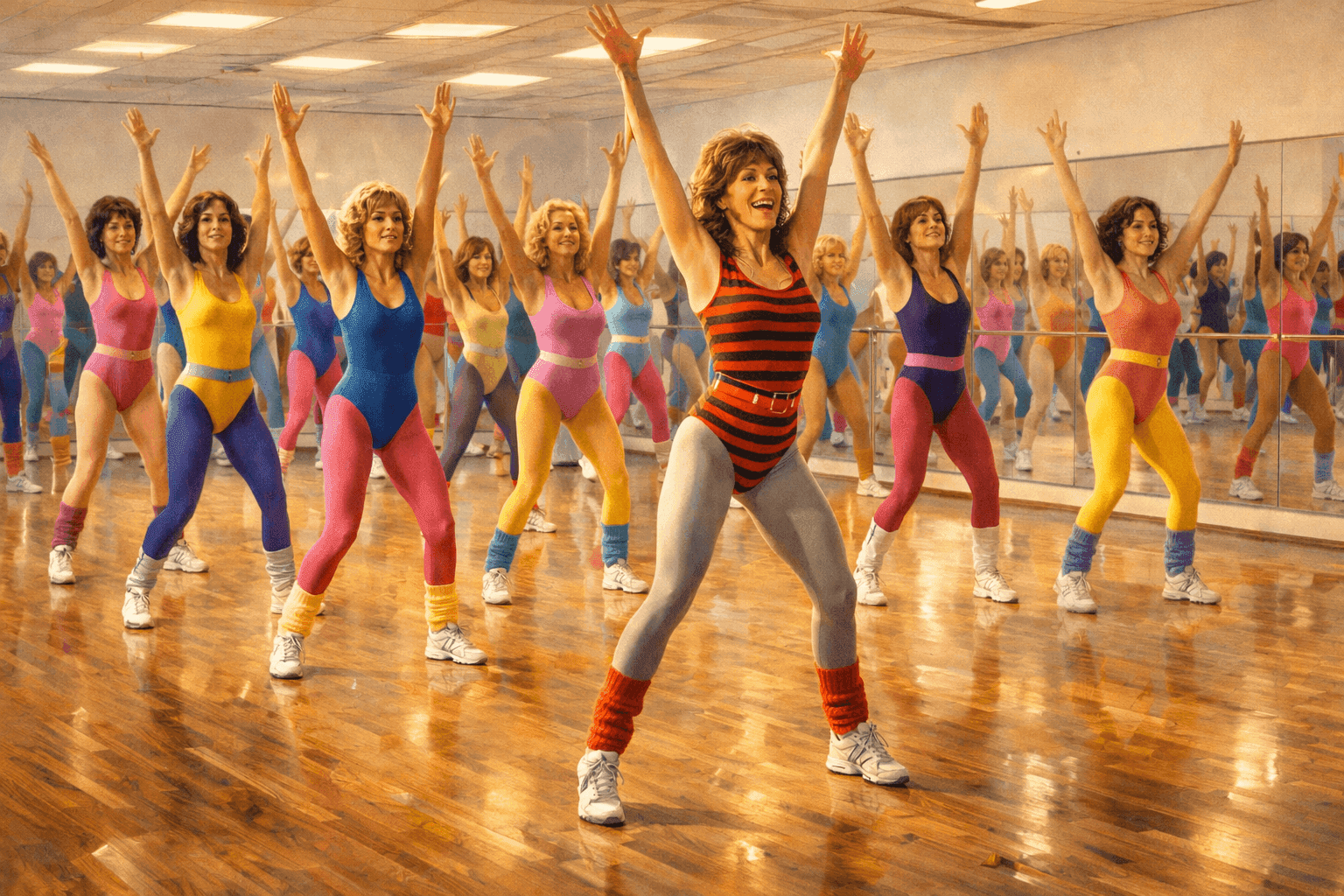
On April 24, 1982, Jane Fonda released her first workout video — Jane Fonda's Workout — and in doing so helped create an industry, redefine a cultural conversation about women's bodies, and prove that the home video format could be used for something other than movies and television reruns. Fonda had been running a workout studio in Beverly Hills since 1979, teaching aerobics classes rooted in the work of Leni Cazden, a dancer whose approach combined cardiovascular exercise with strength training in a format that was demanding, rhythmic, and — critically — something that women who had never thought of themselves as athletes could imagine doing. The video distilled that approach into eighty minutes of instruction that could be performed in a living room, and it arrived at precisely the moment when the VCR was becoming a household appliance and the fitness boom of the late 1970s was reaching a mainstream audience hungry for exactly what it offered.
The numbers that followed were staggering. Jane Fonda's Workout became the best-selling home video of its era, eventually selling more than 17 million copies, and it launched a franchise of twenty-three workout tapes that generated more than $100 million in revenue over the following decade. More significantly, it helped shift the cultural understanding of exercise from something done by athletes or the unusually dedicated into something ordinary people — and particularly ordinary women — could reasonably incorporate into their daily lives. The leotard, the leg warmer, and the step-aerobics format became the visual shorthand of an era, but the underlying message was more durable than the fashion: that physical fitness was not a luxury or a vanity but a form of self-care available to anyone with a television and enough floor space to swing their arms. Fonda's video did not invent that idea, but it delivered it to more living rooms, in more parts of the country and eventually the world, than any fitness program before it.