A Phone Call Across Three Decades
On Wednesday night, President Trump announced on Truth Social that the leaders of Israel and Lebanon would speak to each other on Thursday, April 16, 2026 — the first direct communication between the two countries' leaders in more than three decades. "It has been a long time since the two leaders have spoken, like 34 years," Trump wrote. "It will happen tomorrow. Nice!" The announcement came one day after Israeli and Lebanese ambassadors held their first direct diplomatic talks since 1993 at the U.S. State Department in Washington — a two-hour meeting hosted by Secretary of State Marco Rubio that the State Department itself called a "historic milestone." Two countries with no formal diplomatic relations, officially at war since Israel's founding in 1948, are — however tentatively, however fragilely — talking.
The Weight of What Has Never Been Said
To understand why this moment matters, it helps to understand how thoroughly the silence between Israel and Lebanon has been institutionalized. Lebanon has no formal diplomatic relations with Israel. A Lebanese law dating to 1955 forbids its citizens from having any contact with Israelis at all, though it is selectively enforced. The two countries have been formally at war for 78 years — longer than most of their current populations have been alive. The last time they sat across a table at this level was 1993, in the context of the Oslo peace process, when Lebanon participated in multilateral talks alongside other Arab states. That diplomatic track went nowhere; Lebanon withdrew, and the silence that followed has stretched across three decades of wars, invasions, assassinations, and tens of thousands of lives lost. A Lebanese law still on the books. An official state of war still in force. And now, a phone call.
The history of missed openings between these two neighbors is long and painful. In 1983, at the height of Israel's occupation of Lebanon during its civil war, the two countries actually signed a peace agreement — one that was rescinded by the Lebanese government a year later under pressure from Syria and internal divisions. In 2022, following years of indirect American mediation, Israel and Lebanon agreed on a maritime border delineation, a quiet but significant step. Now, with Israel conducting an active ground campaign in southern Lebanon, more than 2,000 Lebanese dead, over a million displaced, and the shadow of the broader U.S.-Iran war still hanging over the region, the Lebanese and Israeli ambassadors sat down together at the State Department while the guns were still firing. Secretary Rubio called it "a historic opportunity," while acknowledging that "all of the complexities of this matter are not going to be resolved in the next six hours."
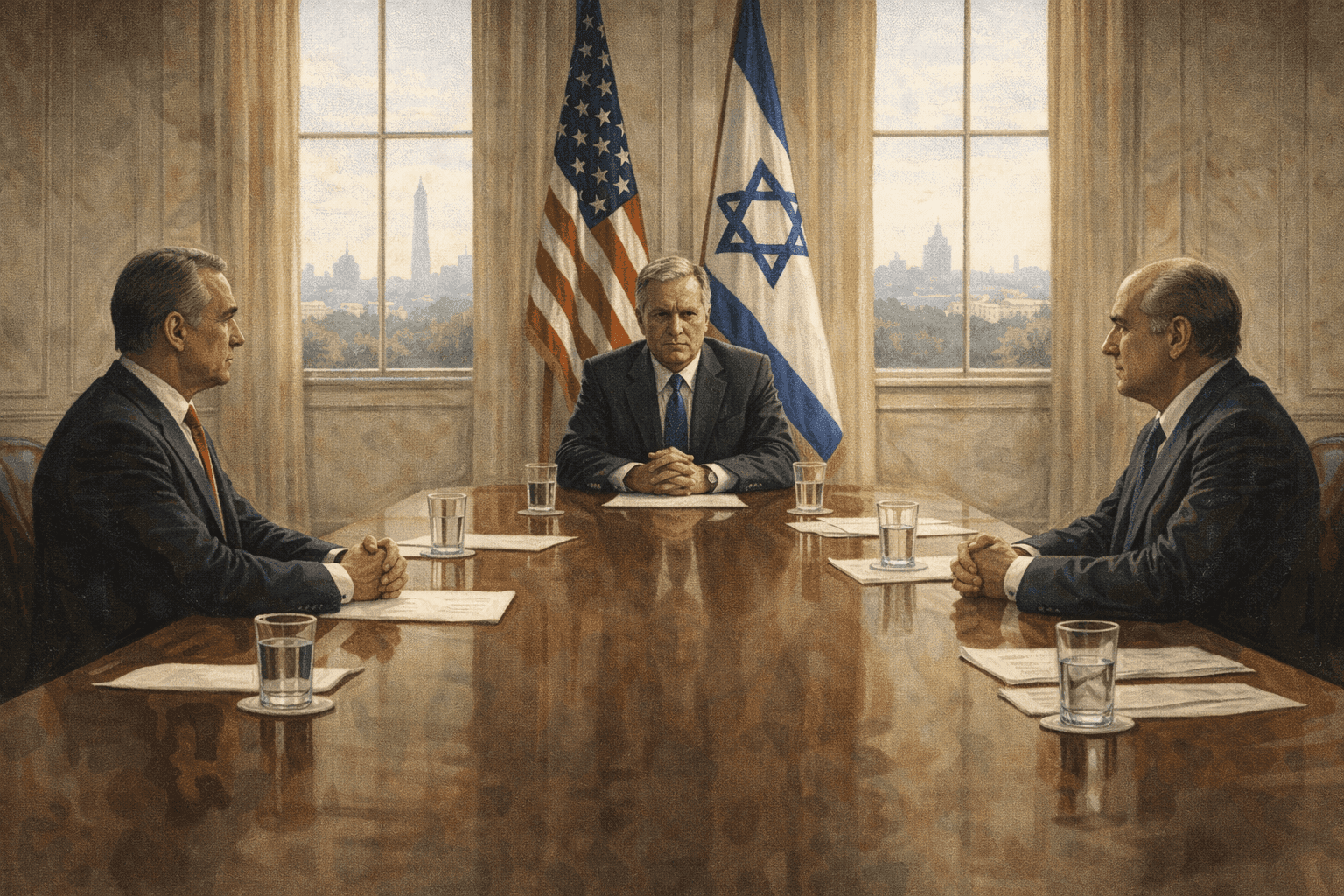
The historical parallels are striking and deliberately evoked: the Oslo Accords of 1993, brokered by the United States, which produced the first handshake between an Israeli prime minister and a Palestinian leader on the White House lawn. The Egypt-Israel peace treaty of 1979, which ended 30 years of war between those two neighbors and which nearly everyone called impossible until the moment it wasn't. The Jordan-Israel peace of 1994. Each of those moments began with a conversation that nearly didn't happen, in a room that one side almost didn't enter. The road from today's phone call to anything resembling lasting peace is long, uncertain, and paved with obstacles that have stopped every previous attempt. Hezbollah has already declared it will not abide by any agreement the Lebanese government reaches. The fighting in southern Lebanon continues. But the leaders of Israel and Lebanon are speaking — and after 30 years of silence, that alone is news that history will record.