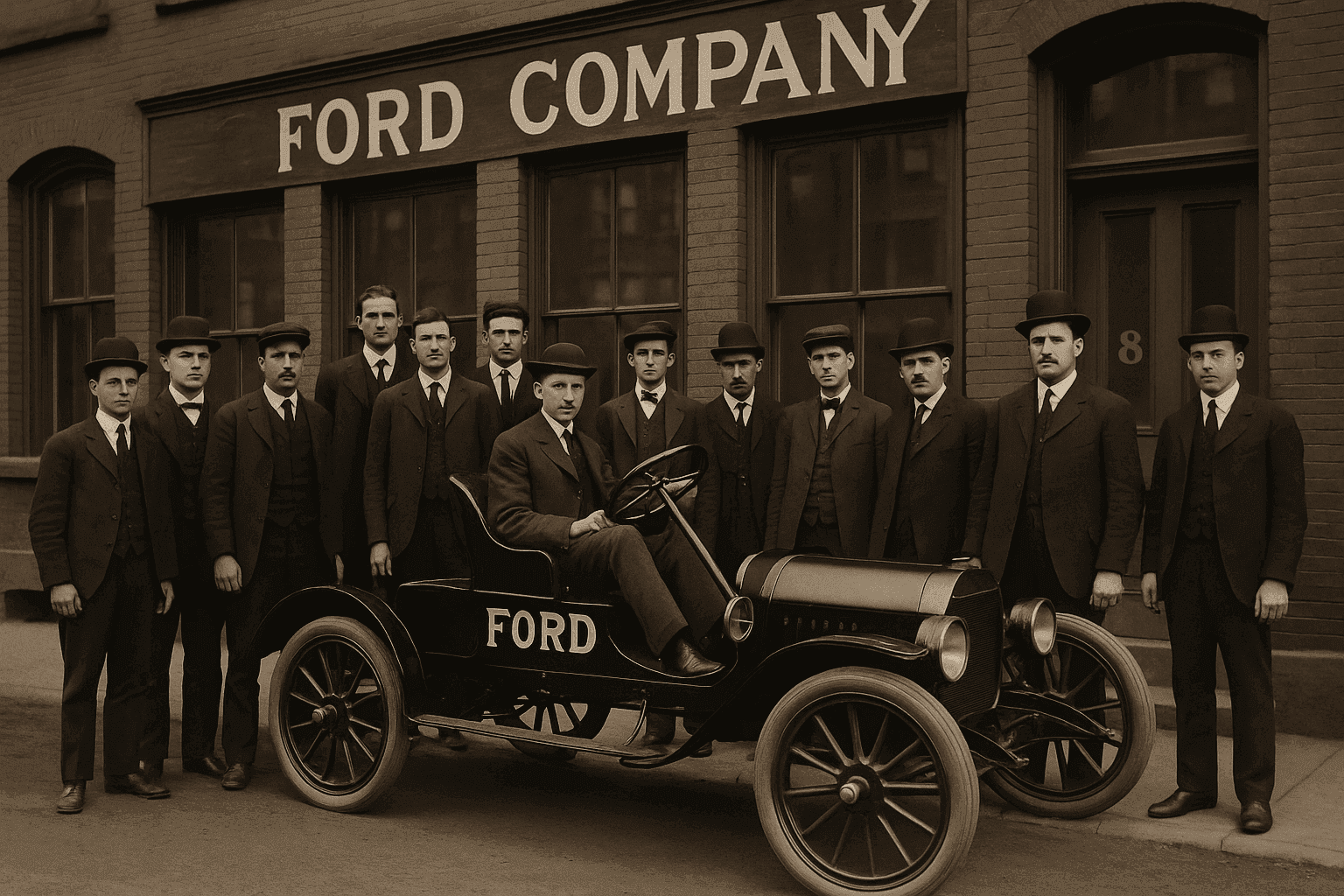
On June 16, 1903, the Ford Motor Company was officially incorporated by Henry Ford and a group of 12 investors in Detroit, Michigan. At the time, the automobile was still a luxury item—expensive and inaccessible to most Americans. But Henry Ford had a bold vision: to build a reliable, affordable car that everyday people could own and drive.
This vision set the wheels in motion for one of the most transformative developments in modern industry.
Revolutionizing Manufacturing
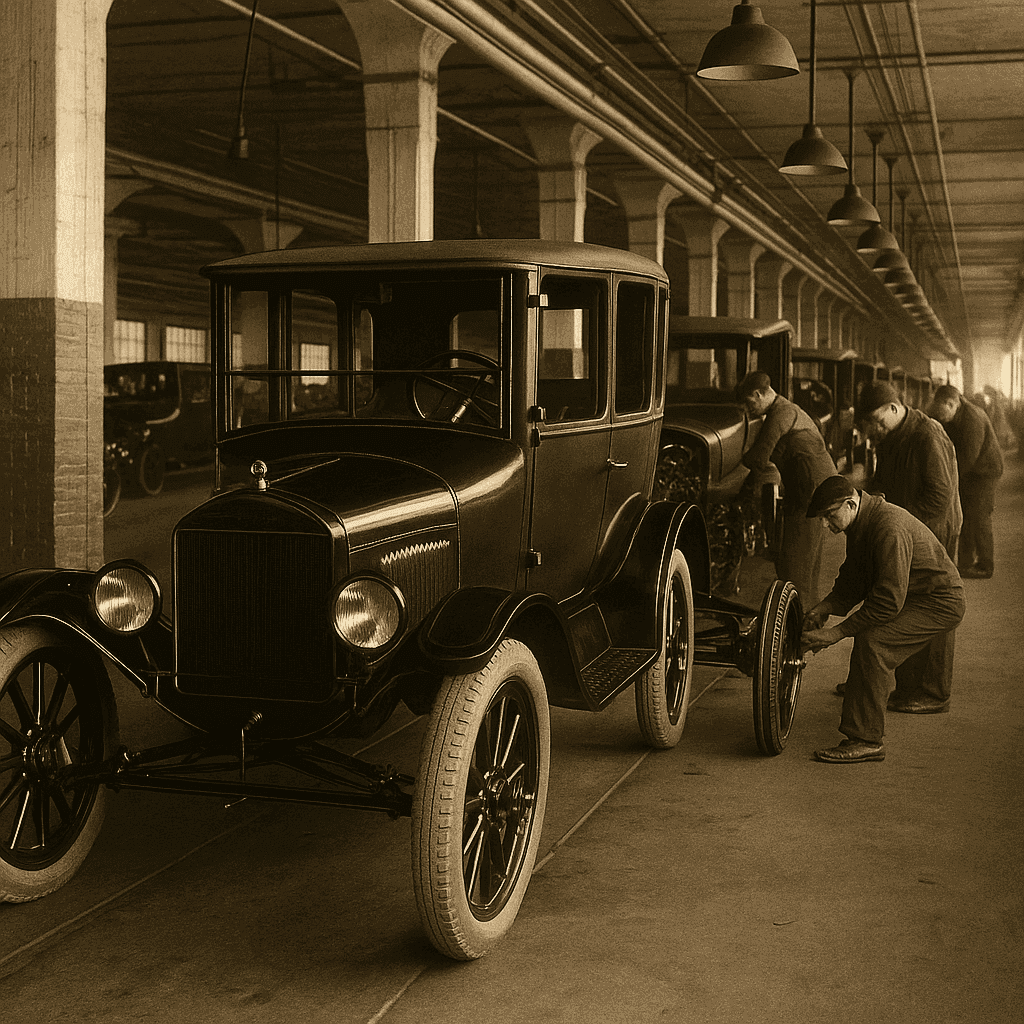
What truly set Ford apart was not just the car itself, but how it was made. In 1913, Ford introduced the moving assembly line to automobile production—a radical innovation that drastically cut production time and costs. With this method, the time to build a Model T dropped from more than 12 hours to just 90 minutes.
The ripple effects were enormous. Ford’s efficiency model was adopted across countless industries, ushering in the age of mass production and changing the nature of work itself.
Democratizing Mobility
The Model T, introduced in 1908, became the symbol of Ford’s mission. Priced low enough for middle-class Americans, it put the power of mobility into the hands of the masses. For the first time, people had the freedom to travel far beyond their neighborhoods without relying on trains or horses.
This shift dramatically reshaped American life—spurring suburban growth, redefining commerce, and connecting communities in new ways.
A Legacy on Wheels

The success of the Ford Motor Company catalyzed the growth of entire industries, from steel and rubber to oil and road construction. Ford's influence extended well beyond the automobile, impacting labor practices through the introduction of the five-dollar workday and setting new standards for industrial wages and conditions.
Today, Ford remains a global symbol of innovation and accessibility, a company that didn't just build cars—it changed the way the world moves.