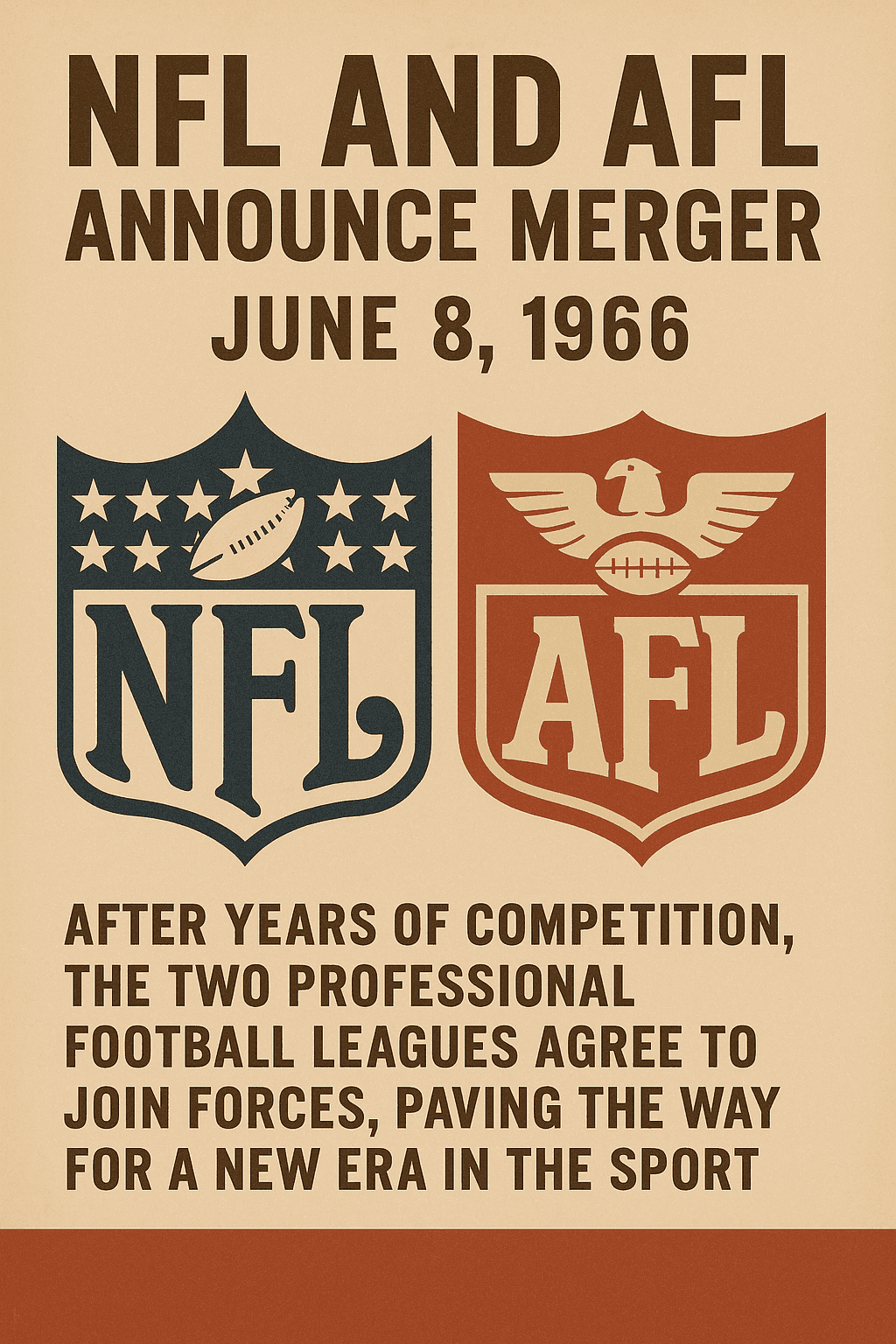
On June 8, 1966, the landscape of American professional football was forever changed when the National Football League (NFL) and the American Football League (AFL) announced their historic merger. After six years of fierce competition for players, fans, and television contracts, the two leagues agreed to unite under one governing body, with full integration set to be completed by the 1970 season. This unification not only brought stability to professional football but also laid the foundation for one of the most celebrated sporting events in the world: the Super Bowl.
Ending a Rivalry to Build a Powerhouse
The AFL had been founded in 1960 as a challenger to the established NFL, attracting talented players and launching teams in new markets. The competition between the leagues quickly escalated, especially in terms of recruiting top college talent, leading to inflated player salaries and bidding wars that threatened the financial health of both leagues.
Rather than continue this costly rivalry, owners from both leagues came together to negotiate a peaceful merger. Under the agreement, the leagues would maintain separate schedules through 1969, but starting in 1970, they would combine into a single league with two conferences—the American Football Conference (AFC) and the National Football Conference (NFC).
The Birth of the Super Bowl
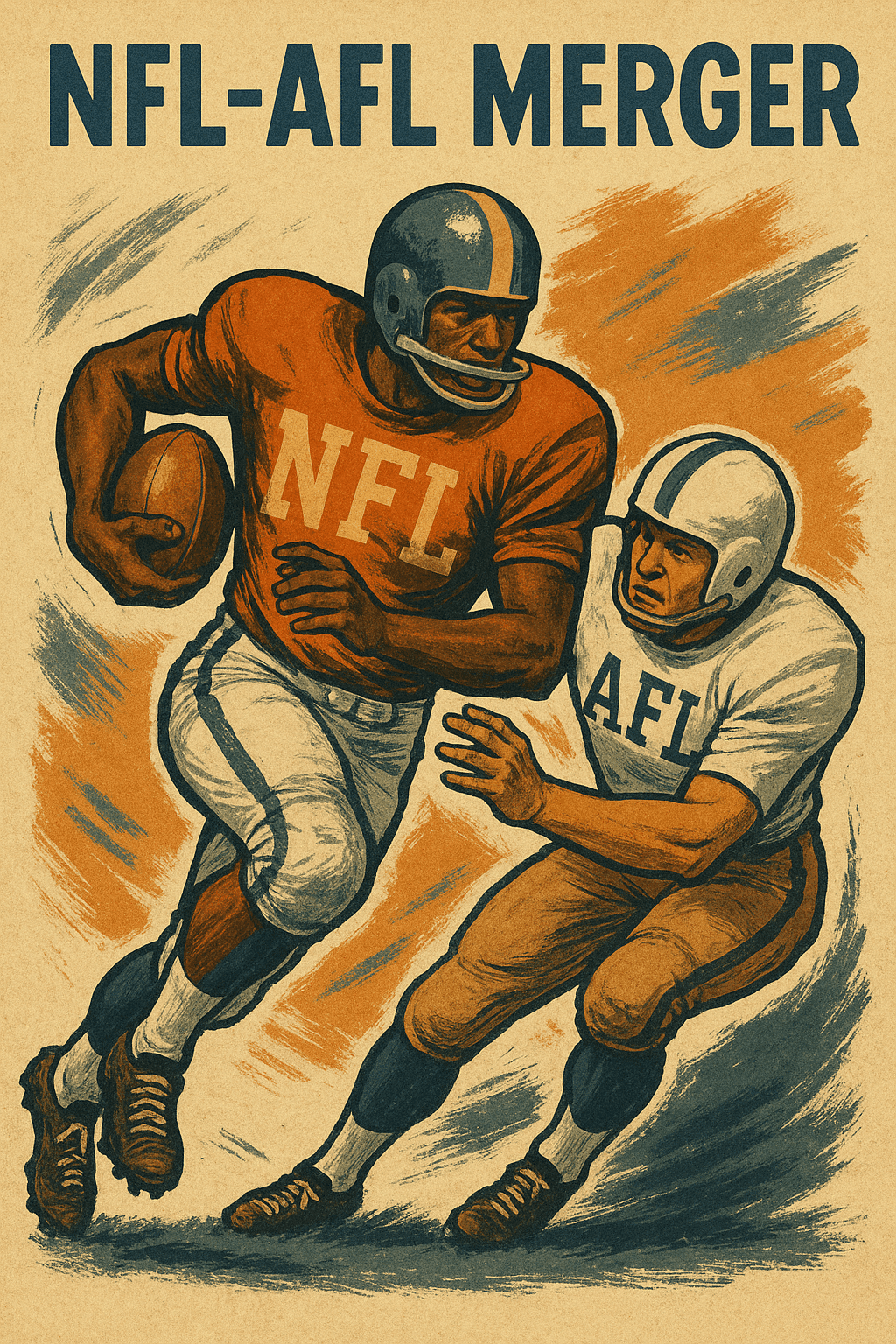
One of the most immediate and lasting impacts of the merger was the creation of a new championship game to pit the best team from each league against one another. This game, initially known as the AFL-NFL World Championship Game, would soon be renamed the Super Bowl.
The first Super Bowl was played in January 1967 between the NFL’s Green Bay Packers and the AFL’s Kansas City Chiefs. Though the Packers dominated the early games, the event quickly grew in popularity and prestige, becoming the most-watched annual sporting event in the United States and a major cultural phenomenon.
Transforming the Sport
Beyond creating the Super Bowl, the merger had profound effects on the business and structure of professional football. It helped standardize player contracts and draft procedures, bringing fairness and consistency to how talent was acquired and managed. It also provided television networks with a unified, more marketable product, which led to lucrative broadcasting deals that fueled the NFL's rise into a multibillion-dollar enterprise.
Franchise stability improved, and expansion teams helped grow the league’s national footprint. As a result, professional football eclipsed baseball in popularity by the late 20th century, becoming America's most-watched sport.
A Lasting Legacy
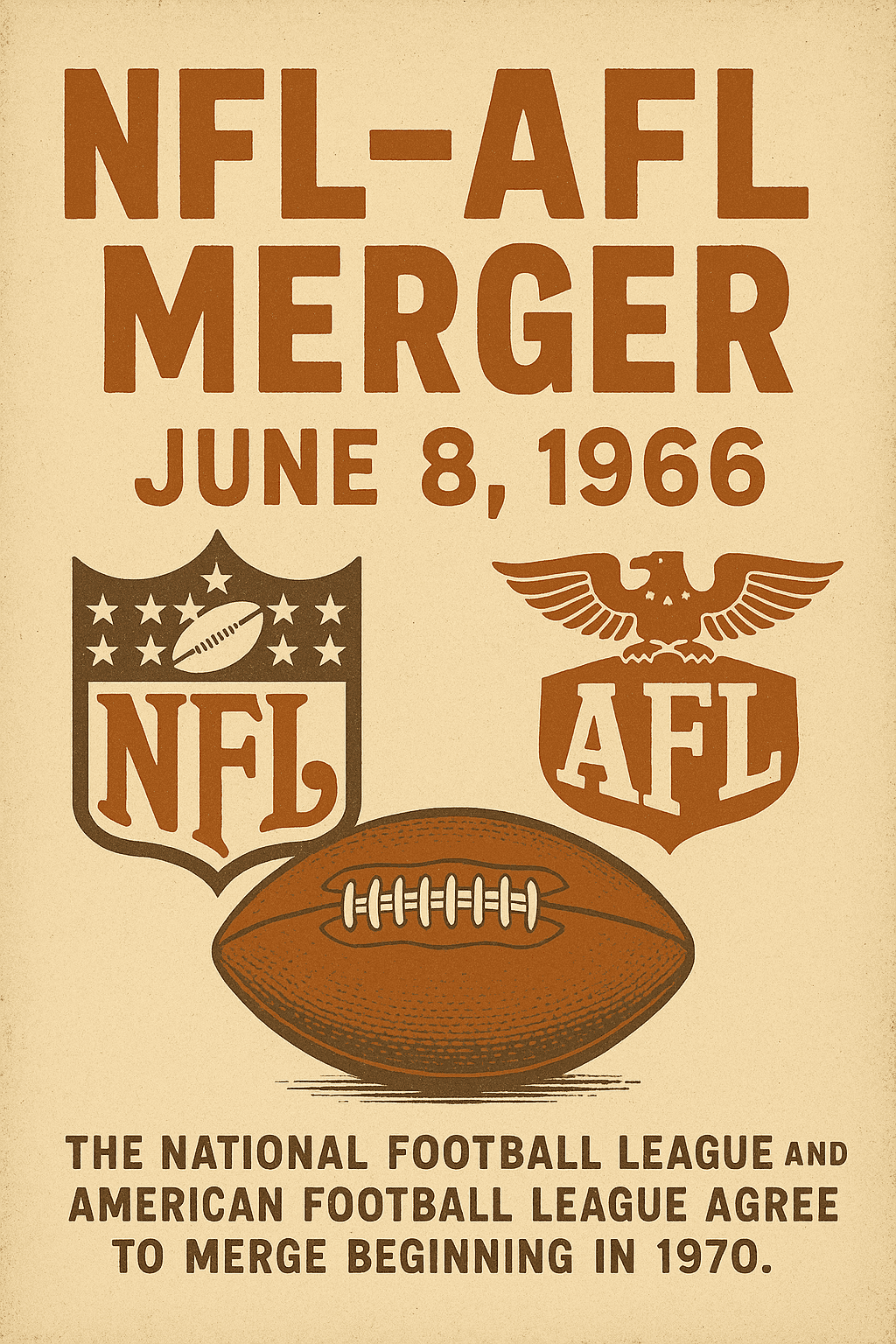
The merger announced on June 8, 1966, was a turning point that elevated American football to new heights. It united a fractured sport, brought about a golden age of innovation and expansion, and created a model of success that other leagues would attempt to emulate. Today, the NFL stands as a global sporting powerhouse, and its roots trace directly back to the spirit of compromise and vision that led to that pivotal agreement between two rival leagues.